How Coding Can Cultivate Deep Civic Engagement
Incorporating learning from historic social movements into tech education ignites student interest in shaping the future.
By Tambra Clark
October 7, 2026
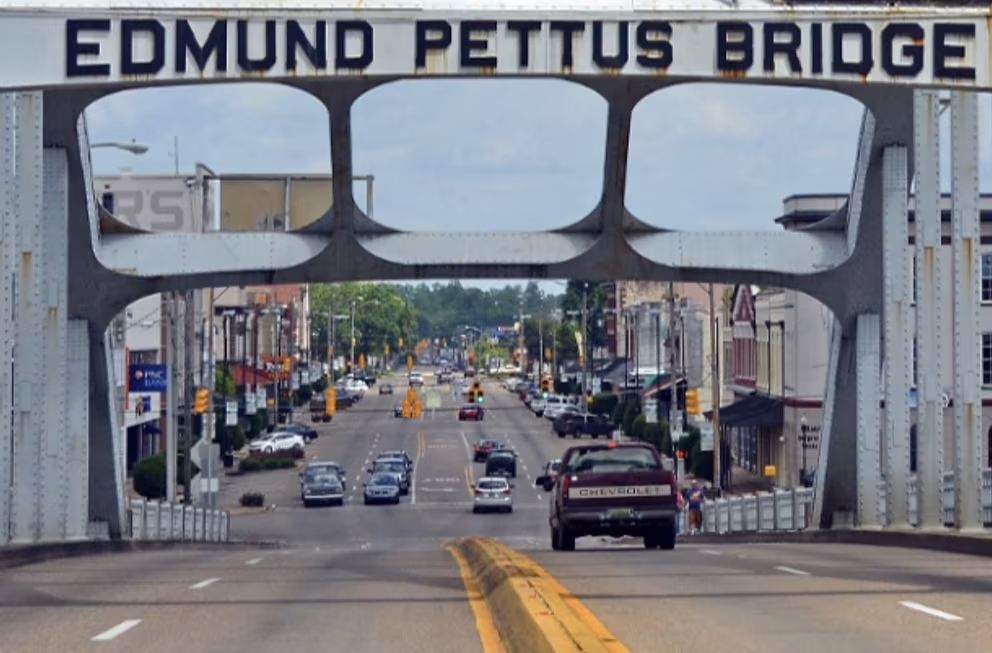
Source: Institute for History & Equity, Selma, Alabama
Educational Learning Tour in Selma, Alabama.
Growing up in Joliet, Illinois, my understanding of history was largely shaped by recurrent classroom materials and historical figures I’ve only read about in textbooks. Back then, my education felt like a passive process of memorizing facts rather than connecting with living stories. Classroom technology also felt abstract and disconnected from what I learned about culture and history.
Moving to Alabama in 2002 to attend Miles College, a historically Black college, building a life in Birmingham after graduation and dedicating myself to education laid a deep, personal foundation in the heart of the civil rights South. However, it wasn’t until 2025, on the Institute for Common Power’s Truth and Purpose Learning Tour, that something profound shifted in me. The rigorous six-day journey through the historic landscape of the civil rights movement — from Atlanta's Sweet Auburn district to Montgomery, Selma and Birmingham — fundamentally transformed the way I look at history and how I will teach it for the rest of my life.
Up to that point, I had taught computer science and other mandated lessons primarily as a career skill, focusing on logic, syntax and software mechanics. But after this transformation, I was determined to lead my scholars from passive consumers of technology to active creators who could use code to immortalize the very faces they passed on their streets every single day. Because of this transformation, I believed the most important code they would ever write was no longer meant for the screen — it was now meant to awaken the world to the brilliance right outside their doors.
As part of the Institute for Common Power’s Truth and Purpose Learning Experience, I spent six transformative days traveling across Alabama and Georgia alongside a cohort of fellow educators. Designed as an intensive professional development initiative to move education to action, this group brought us face-to-face with scholars, community organizers and everyday folks.
The tour grounded us in what the Institute for Common Power calls “Movement Learning,” a three-tiered educational framework built on three essential acts:
Learning from social movements that preceded us to understand the deep historical roots, structural disparities, tragedies and triumphs born from our past.
Learning by physically engaging in the exact geographic sites where history occurred.
Learning how to project and create change as we move actively toward a more equitable future.
We explored historic sites in Birmingham, stood on the historic Edmund Pettus Bridge in Selma, engaged with urban farming at the Jones Valley Teaching Farm to understand food deserts and why systematic disinvestment makes them disproportionately prominent in Black communities, and discovered local landmarks I never knew existed in my own backyard.
Returning to South Hampton K-8 School after those six days, I had an urgent mission: my scholars needed to see code not just as computer logic, but as an opportunity to engage with the legends they walk among every day. I came to understand that teaching STEM is most powerful when paired with interdisciplinary learning and cultural history, transforming technical skills into a profound vehicle for civic agency and community storytelling.
Connecting U.S. History with Our High-Tech Future
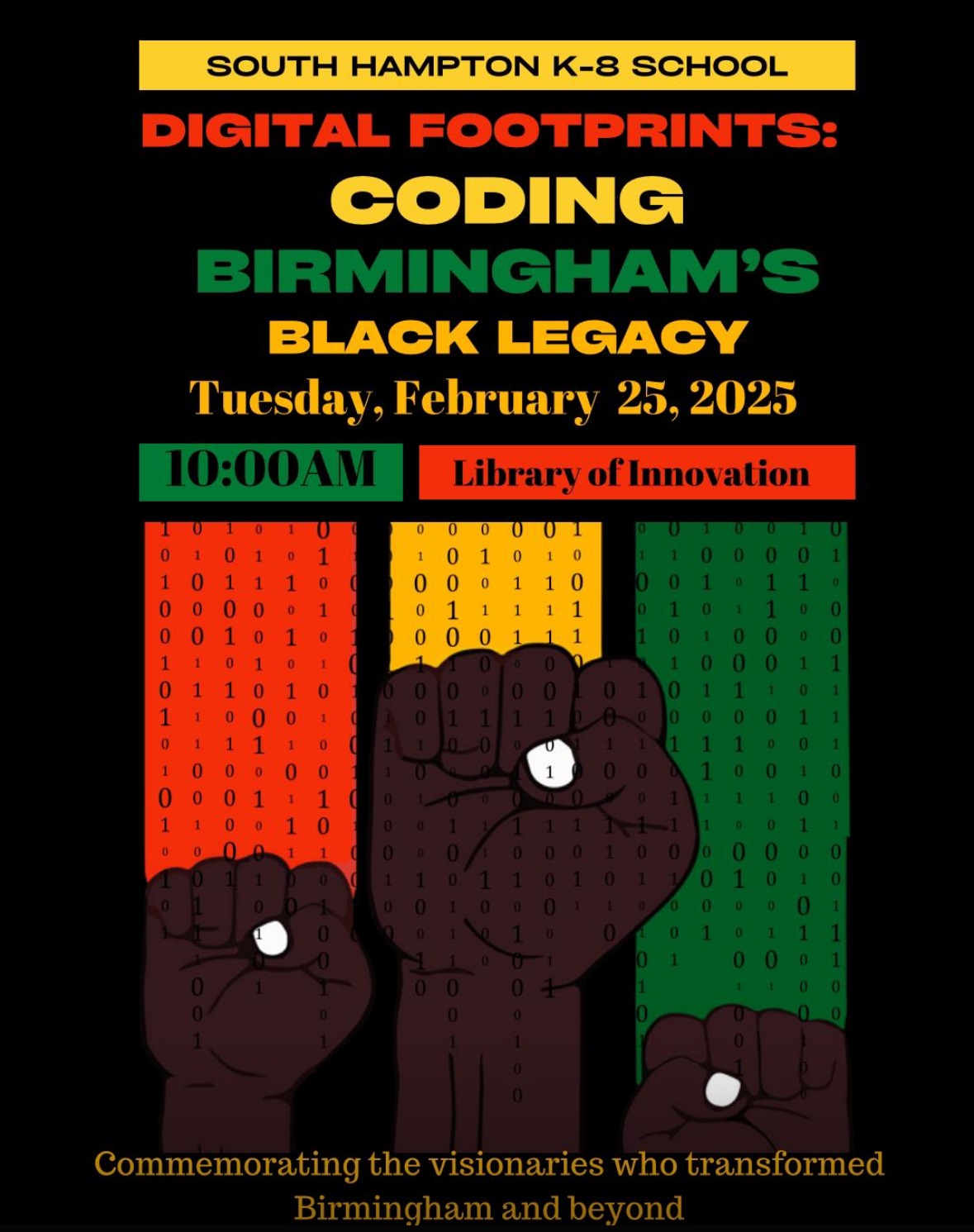
When I returned to my classroom from the tour, my middle schoolers were completing a unit in Apple’s Swift Playground, using the built-in “All About Me” app template. In that unit, my scholars had learned how to write SwiftUI structures, configure stack layouts and display dynamic image views and text fields about their personal hobbies. The standard curriculum stopped at self-reflection, but I saw an immediate opportunity for a civic leap.
As Black History Month wrapped up, we pivoted our computer science curriculum into a new initiative: “Coding Birmingham’s Black Legacy.” I didn’t want to assign students another coding exercise; I wanted to transform our classroom into a digital archive and design studio.
Instead of coding apps about themselves, our seventh and eighth graders applied their newly acquired coding skills to build interactive iOS applications honoring local pioneers who shaped society and had deep connections to Birmingham. The first step in translating these rich historical narratives into functional mobile experiences was designing a structured technical framework from the ground up.
The Technical Architecture: Engineering a Four-Screen App
To bring these historical figures to life, students moved beyond simple drag-and-drop interfaces into structural Swift programming. Using Swift Playground on iPads and MacBooks, they engineered a standardized yet customizable four-screen interactive app navigation path for each hero:
Screen 1: Title and Hero Page – Custom visual layout featuring the pioneer’s full name, stylized color palettes, high-resolution portrait framing and user navigation triggers.
Screen 2: AI-Assisted Biographical Summary – A structured text view presenting a concise, engaging overview of the pioneer's life story, historical significance and lasting impact on social justice.
Screen 3: Interactive “Did You Know?” Fun Facts Card – Dynamic list views highlighting key policy achievements, community milestones or surprising biographical facts.
Screen 4: Digital Artifacts and Media Gallery – Embedded video playback containers, archival photographs, historical artifacts, primary source documents or links to digital museum records.
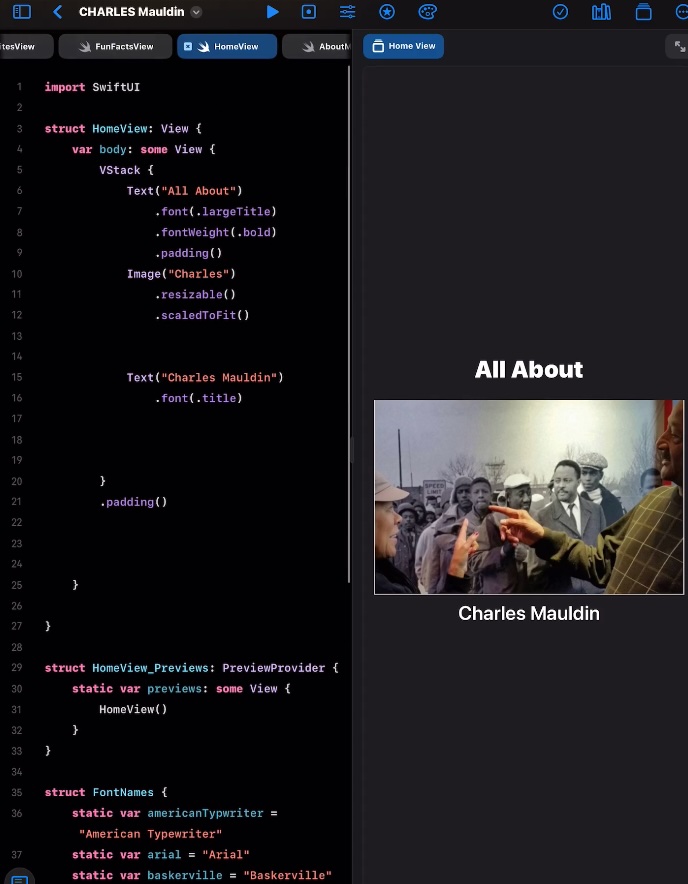
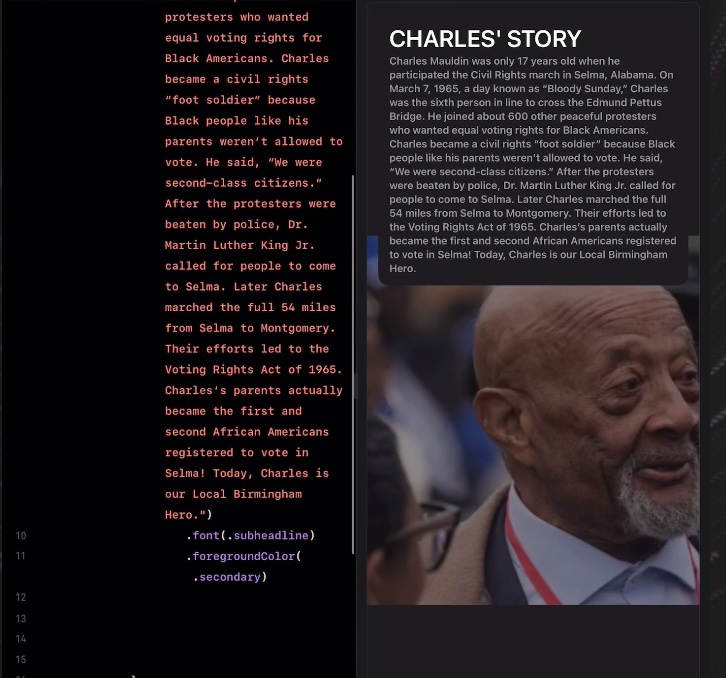
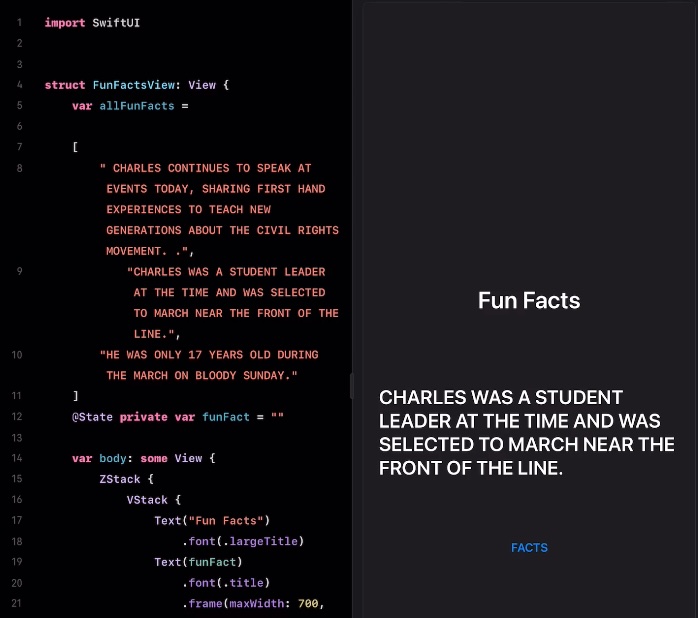
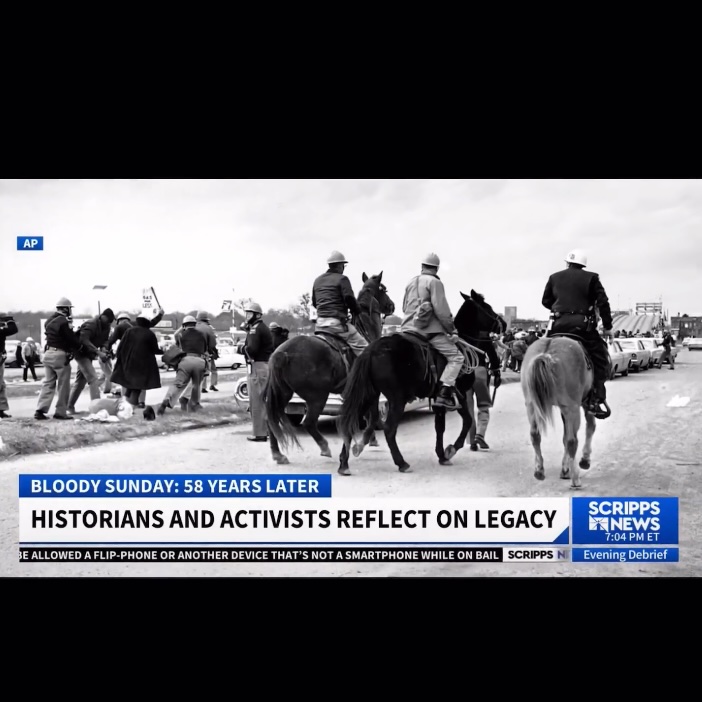
A critical layer of our technology workflow involved integrating generative Artificial Intelligence (AI) into the historical research process. Many of our selected pioneers, such as local civil rights leader Charles Mauldin or retired Judge U.W. Clemon built complex, multi-decade legacies as, respectively, an activist and Alabama’s first Black federal judge.
Beyond interviewing these living legends, students used AI tools like Gemini, Claude and ChatGPT as research co-pilots. They practiced prompt engineering, asking AI models to synthesize lengthy biographical archives, isolate key historical milestones and reframe complex legal or political terminology into clear summaries appropriate for an app interface.
Students didn’t just summarize history; they unlocked the human heart of those Birmingham pioneers, making profound legacies accessible and genuinely felt by anyone who opens the app. By turning historical archives into experiences, they demonstrated how technology equips young creators to tell their community’s stories in their own terms.
When Code Meets Community: The Library of Innovation Showcase
The climax of our project took place in February2025. Our school’s “Library of Innovation” became an interactive tech showcase. Hosted by our students, their showcase brought together parents, school leaders, local residents, stakeholders and several of the actual pioneers featured in the apps.
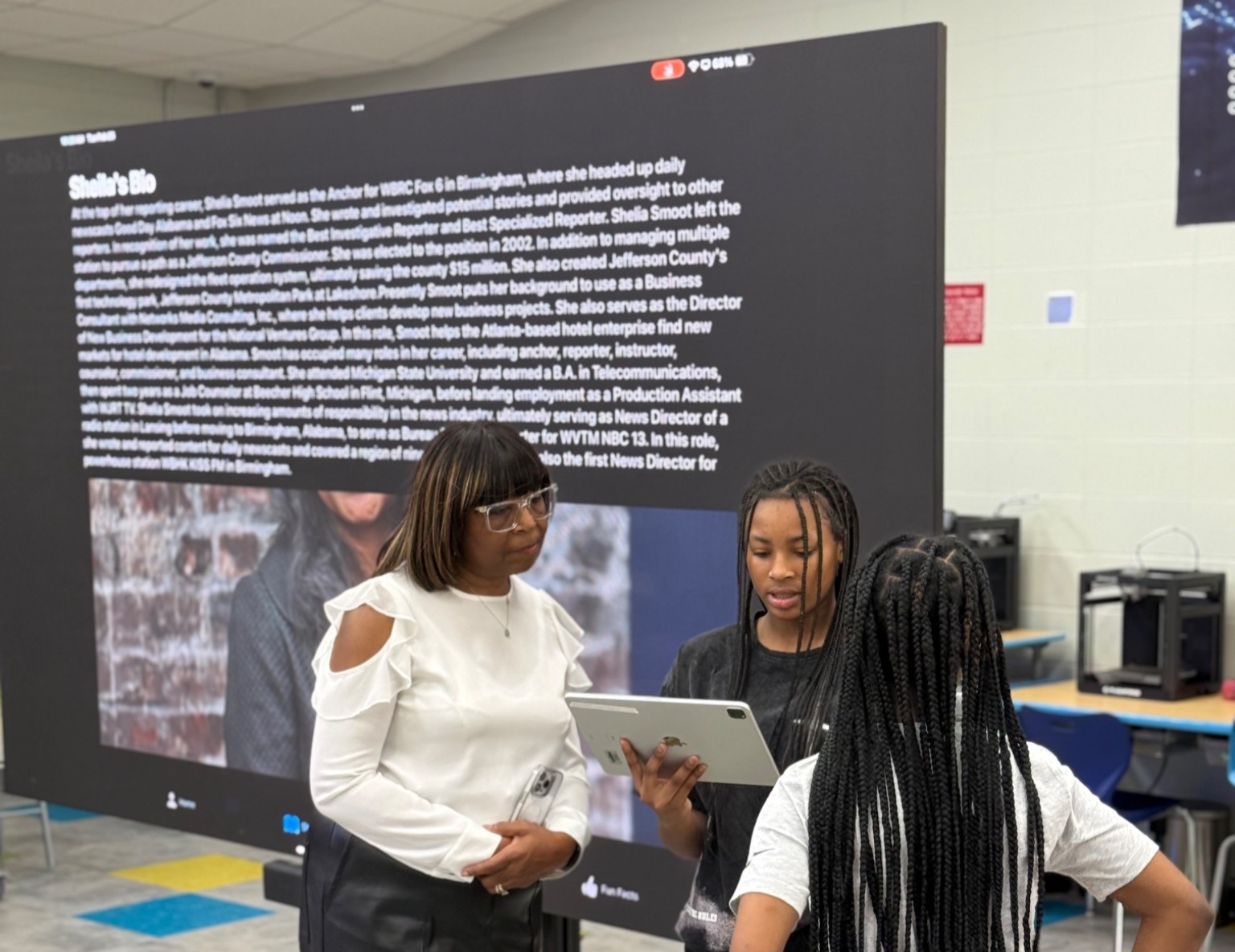
The atmosphere was electrifying. I watched in awe as 13-year-old coders stood beside their screens, proudly guiding community elders through app navigation paths, explaining line-by-line Swift code and demonstrating how AI helped them summarize local history. Their eyes lit up with pride as living legends interacted with apps built in their honor.
In that moment, Movement Learning’s true promise came alive. Technology didn’t isolate our students behind screens; it re-anchored them to their roots and proved that their voices, written in lines of Swift code, belong at the center of Birmingham’s ongoing legacy.
Empowering the Next Generation of Digital Storytellers
Supported by the newly established Institute for History & Equity, this approach brings to life founder and executive director Terry Anne Scott’s concept of historical empowerment, ensuring that by empowering students to code the stories of the legends walking among them, we teach them they have the power to code the future. By studying the resilience and innovation of local civil rights pioneers and community leaders, students realize that systemic change is driven by ordinary people taking extraordinary action. They stop viewing history as something passive and start seeing themselves as active architects of their communities.
When we combine place-based, Movement Learning with modern digital tools like Swift Playground and generative AI, we do far more than teach computational logic and technical skills. We cultivate deep civic agency in our students.
For educators everywhere, this highlights a vital realization: when we look beyond standard screen time and leverage coding as a canvas for community storytelling, we unlock an unprecedented level of student engagement and investment. Technology ceases to be just another subject to test and evolves into a dynamic vehicle for youth to champion social justice, honor local legacy, and discover their own voice.
My journey from Joliet, Illinois, to Miles College and South Hampton K-8 taught me that history isn’t just something we read about; it is something we live and build upon.
By empowering middle schoolers to code the stories of the legends walking among them, we help them recognize their power to code the future.
This story is part of an EdSurge series chronicling educator experiences. These stories are made publicly available with support from Learning Commons. EdSurge maintains editorial control over all content. (Read our ethics statement here.) This work is licensed under a CC BY-NC-ND 4.0.
Popular on EdSurge
Read Next
News
EdSurge Podcast
Two Students, Two Questions They Wouldn’t Let Go

Voices of Change
Artificial Intelligence
News
Childcare
Hundreds of Thousands of Eligible Kids Are Waiting for Childcare Assistance

Voices of Change
Artificial Intelligence