My Preschool Students Taught Me What Educators Lose in English-Only Programs
As Head Start faces a proposal to end bilingual education, remember that children aren’t the only ones who benefit from multiple languages.
October 28, 2026
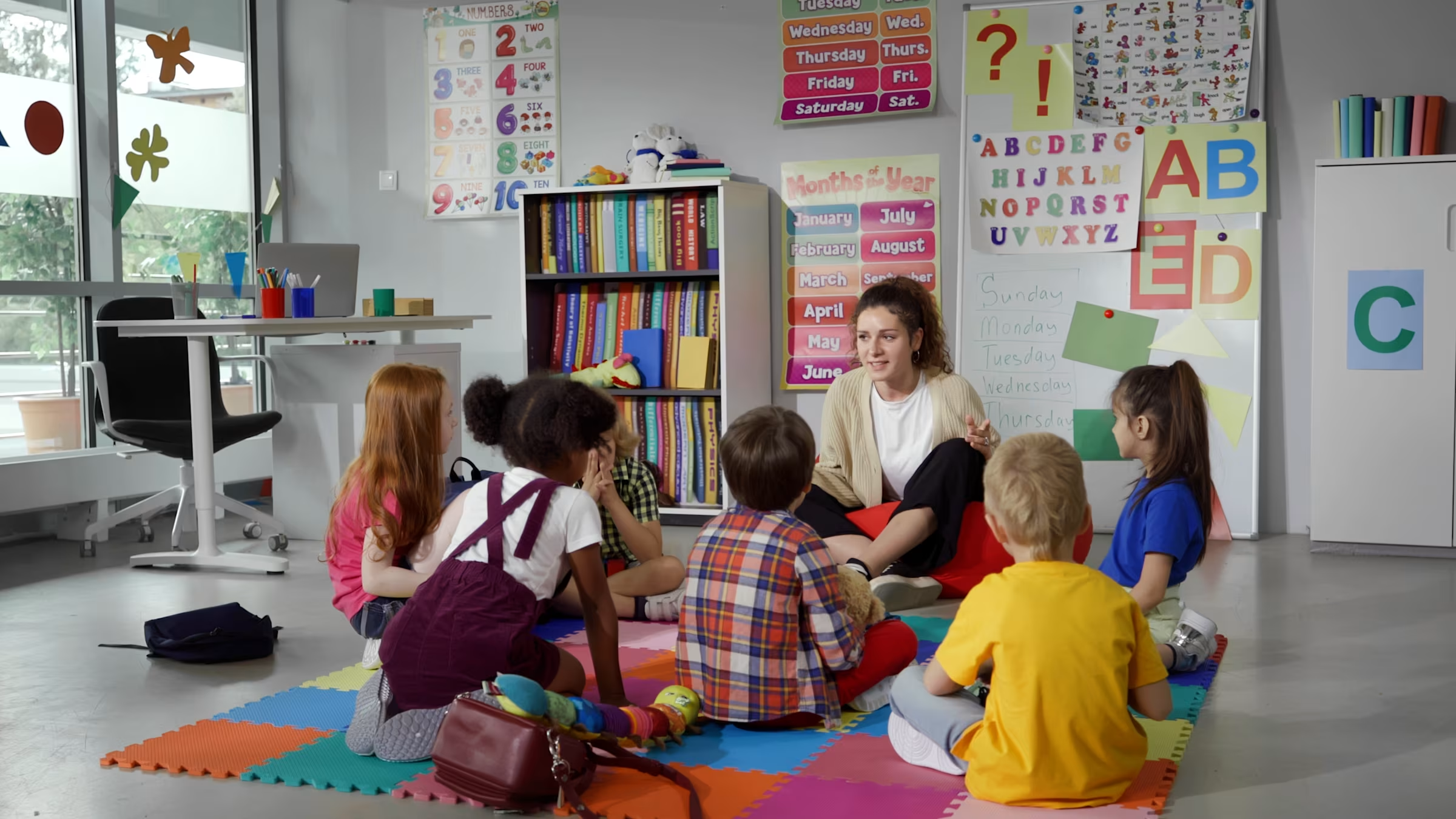
Credit: nimito / Shutterstock
There’s this fabulous Italian expression: boh.
It’s one of those words you feel when you say it. It starts deep in your belly and expands upward. Your lips purse for the “buh,” then open into the “ohhhh,” which you can stretch as long as needed. And its meaning? Well, that’s harder to explain.
Boh suggests not knowing. But it can communicate resignation, skepticism, indifference or bemusement. It means all these things and none of them exactly; it doesn’t really translate. In “Spider-Man: Far From Home,” MJ discovers boh on a school trip to Italy and becomes enchanted.
I became enchanted with boh, too, as a young teacher at an international school in a small Italian city. Most of my preschool students were Italian children whose parents wanted them immersed in English. I was expected to speak only English with them.
One morning, after setting up playful activities with great intention around my classroom, two students arrived together. Eagerly, I showed them some materials I was certain they would love and asked if they wanted to try.
One boy looked at me with raised eyebrows, side-eyed his friend, shrugged and said, “Bohhhh.” Then they immediately walked away to play with trains.
At the time, I followed the school’s English-only expectations. But the longer I taught, the less comfortable I became with a philosophy that asked children to leave their home language outside the classroom. Eventually, that discomfort contributed to my decision to leave the school.
Multilingual children have an extraordinary capacity to teach us about how we communicate and open our eyes to a more interesting world. As educators, we miss out on that learning when we don’t allow children to show up in our classrooms with every part of who they are — including their languages.
What’s Ahead for Head Start
Children and teachers alike stand to lose under a proposed Trump administration rule that would require Head Start programs to conduct all instruction in English. This would undo 2016 standards that support bilingualism and divert funds from multilingual services to English-language education and “assimilation.”
In my experience, English-only policies send a powerful message to children: The language you bring from home — that of your parents and grandparents, of jokes, songs and comfort — does not belong in school. Such policies also rob educators of rich opportunities for connection and learning.
I now work in a U.S. preschool with publicly funded pre-K classrooms, housed in a historic church with a magnificent golden cockerel (which our students fondly call “rooster”) perched atop its steeple. In 2023, the bird statue was taken down by crane for preservation, a spectacle that captivated our preschool community.
I vividly remember talking about it with a bilingual student, and our conversation turned to the sounds roosters make. This child was keen to teach me what a rooster “says” in Portuguese, the language her family speaks at home. I offered what it says in Italian, the language my family uses at home. Then we got to English, the language we shared at school, and laughed together at that funny-sounding version.
It was a tiny interaction — nothing that would appear on a developmental assessment or kindergarten-readiness checklist. But we were bonding. She was showing me something she knew that I didn’t. Together, we appreciated the absurdity that even roosters become “multilingual” depending on who is listening.
If our program treated children’s home languages as something to leave at the classroom door, we might have missed that moment: the chuckle, the inside joke, the opportunity for a child to be the expert and her teacher the learner.
A Missed Opportunity
About one-third of U.S. children under age five are dual language learners, according to a 2025 report from the National Center on Immigrant Integration Policy, part of the Migration Policy Institute. In Head Start, these children bring more than 140 languages to their classrooms. We can’t expect every child to have a teacher who speaks their home language. But we can build classrooms that treat those languages as assets.
Head Start’s current standards reflect this. They recognize “bilingualism and biliteracy as strengths” and call for practices that support children’s acquisition of English while continuing to support their home language.
Research backs this approach. For instance, a 2018 Elsevier study of nearly 2,000 dual language learners in Head Start programs found that using Spanish alongside English did not impede their English development.
But focusing only on measurable outcomes like these misses something.
It misses boh. It misses the multilingual animals. It misses the jokes, gestures and expressions that don’t quite translate. It misses the delight of a child realizing that she knows something her teacher doesn’t. And it overlooks something fundamental to young children’s development: relationships.
Yet these are precisely the kinds of experiences that could become harder to nurture if the proposed changes to Head Start standards become law. It’s not yet clear how such a requirement would translate into everyday classroom interactions. But I wonder whether teachers would begin to hesitate before inviting a child to share a word in their home language, or whether moments of connection like the ones I’ve experienced would become harder to make space for.
In the process, educators would lose something, too. We’d miss opportunities to become better observers, better communicators and better practitioners. We’d miss the wonderful reversal that happens when a 3-year-old suddenly becomes the expert and the grown-up gets to be the student.
That morning as a young teacher in Italy, the children taught me that my well-intended invitation relied too heavily on spoken language. I needed a deeper toolkit for teaching children whose home language was different from mine. They taught me how language carries meaning not only through words, but also gesture, expression, sound, culture and shared understanding. That day, they made me a better teacher.
The school where I currently work isn’t a Head Start program, so the proposed changes wouldn’t directly govern our classrooms. But I don’t think that lets me off the hook. Those of us working in other early childhood settings have a role to play in supporting our Head Start colleagues.
We can continue making room for all of children’s languages in our classrooms, and we can share the lessons from those experiences with families, colleagues, community organizations — and policymakers. Stories like these can help bring the everyday realities of teaching and learning into critical policy conversations. The formal public comment period for the proposed Head Start rule ended on Oct. 6, and we await a final decision. But whatever happens with the proposal, these conversations must not end.
Why would anyone design policies that leave out so much value? I have only one answer — and it doesn’t quite translate.
Boh.
Popular on EdSurge
Read Next

Voices of Change
Artificial Intelligence

Voices of Change
Professional Development



Voices of Change
Teaching and Learning