These Hip-Hop Artists Were Already Teaching
A new degree program credentials hip-hop artists to bring communal, real-world learning to the classroom.
By Ellen Ullman
July 19, 2026
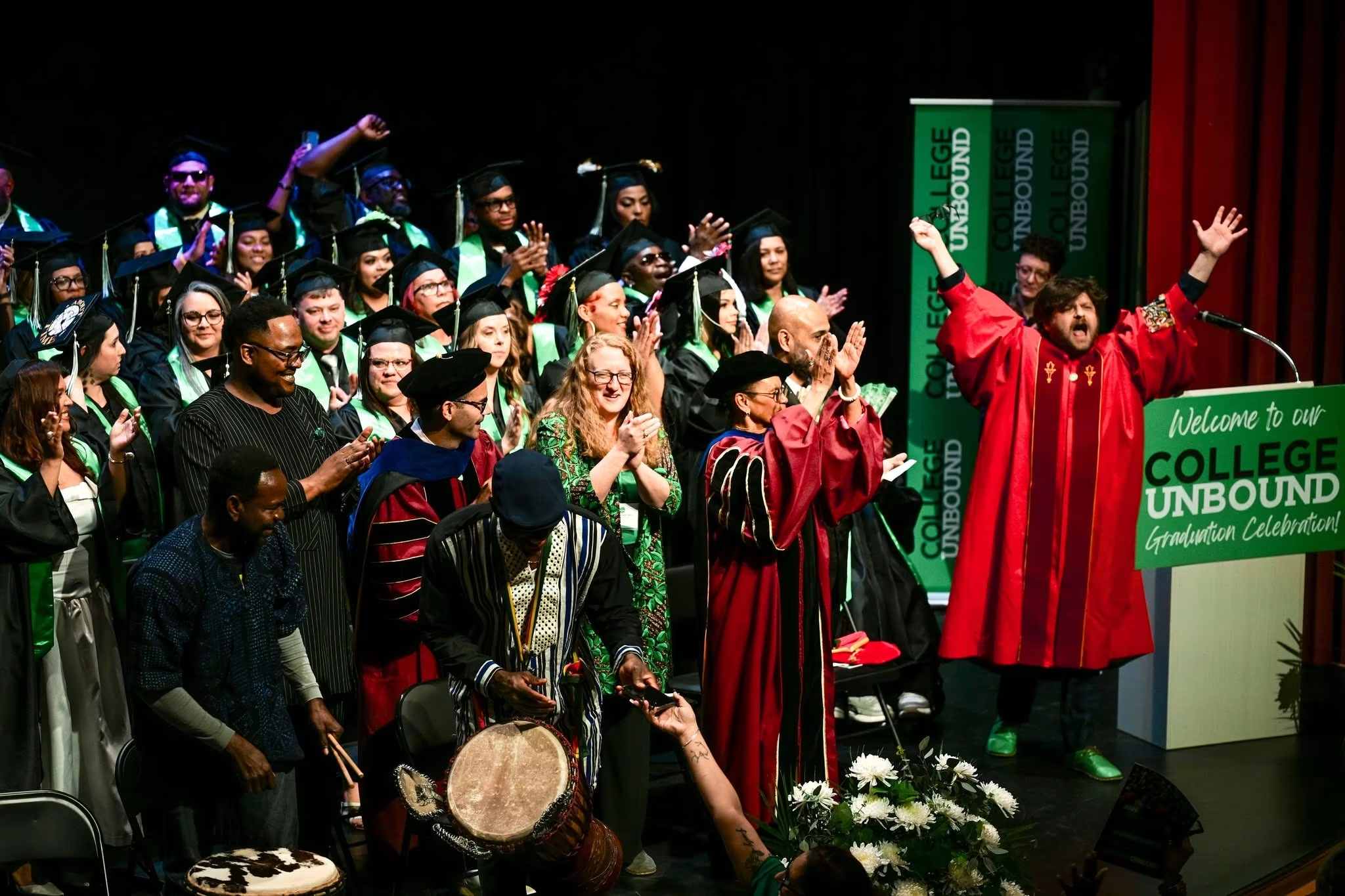
The College Unbound Class of 2026
Credit: College Unbound
For decades, hip-hop artists have been invited into schools as guest speakers, workshop leaders and visiting performers. They’ve mentored young people after school; started nonprofits; taught music production, poetry, history and entrepreneurship; and helped generations of students find their voices.
Yet many of these artists lack the one credential schools still value most: a bachelor’s degree.
But what if these artists have been teaching all along?
A new partnership between College Unbound and the Hip-Hop Education Center aims to answer that question, not by teaching artists how to become educators but by recognizing the expertise they’ve developed through decades of community leadership, cultural work and mentorship.
The program — a Bachelor of Arts in organizational leadership and change designed specifically for hip-hop educators and cultural leaders — isn’t a separate degree or a simplified version of one. Students complete the same degree requirements as every other College Unbound student. “It’s the same degree,” says College Unbound President Adam Bush. “It’s simply lived differently.”
The program is about more than hip-hop. It asks a question that reaches far beyond music: Who gets to decide what expertise looks like?
A Degree Years in the Making
Although the bachelor’s degree officially launched this year, its roots stretch back decades.
Hip-hop emerged outside traditional institutions, often in response to systems that excluded Black and Brown communities. As hip-hop education gained legitimacy, educators wrestled with a difficult question: How can we preserve the authenticity of the hip-hop culture while creating pathways that allow practitioners to teach at schools and colleges?
Long before there was a curriculum at College Unbound, there were conversations between Bush, educator and author Sam Seidel, and Martha Diaz, founder of the Hip-Hop Education Center, who has spent nearly three decades helping to build the field of hip-hop education. These conversations focused on this central question.
For Seidel, who has spent much of his career documenting and advancing hip-hop education, the answer required finding the right institution.
“What was always important,” he says, “was making sure the people who created the culture and have been carrying it forward had a central seat at the table teaching the next generation.”
College Unbound proved to be an unusual fit. Rather than asking students to leave their experience at the classroom door, the college builds on it. Students develop projects rooted in the work they’re already doing, making professional experience, leadership and community knowledge part of the curriculum.
“This program opens opportunities for seasoned practitioners,” adds Diaz. “These are people who’ve spent decades mentoring young people, creating art and leading communities but haven’t always had access to the credentials that allow them to teach full-time.”
From the Stage to the Classroom
For Sebastien Elkouby, a hip-hop artist and educator, the degree feels less like a beginning than the fulfillment of a long-awaited opportunity.
Born in France, Elkouby spent years working in music before becoming a U.S. citizen, raising a family and earning a career and technical education credential. Today, he teaches Global Awareness Through Hip Hop Culture and Beatmaking classes at a public charter school in Los Angeles.
“When I found out about the College Unbound program, I thought, ‘Finally,’” he says. “I couldn’t have designed a better opportunity than going to college under the guise of hip-hop culture.”
His years as an emcee prepared him for the classroom in ways a traditional teacher preparation program might not have. Standing in front of students, he continues, isn’t much different from standing in front of an audience. “You have to capture their attention. You have to tell a story. Teaching is a performance.”
He sees similar parallels in curriculum design. The care he once devoted to writing lyrics with a beginning, middle and end now shapes the lessons he designs. His classes trace the historical roots of hip-hop, connecting music to social movements, politics and culture.
Asante Burks reached a similar conclusion while on a different path. Known professionally as Asante Amin, the rapper and member of Soul Science Lab believes that performing and teaching are two sides of the same coin. “On stage, I want to entertain, educate and inspire. In the classroom, I want to do exactly the same thing,” he says.
His teaching centers on the cypher, the circle where rappers, emcees and beatboxers share ideas, stories and experiences while learning from one another. In that setting, everyone becomes both teacher and learner. “It isn’t just me delivering knowledge. The collective mind is where real learning happens,” he adds.
That philosophy reflects one of hip-hop pedagogy’s central ideas: learning is participatory, communal and deeply connected to identity. It also challenges a persistent misconception. “People think hip-hop education is just playing rap music in class,” says Diaz. “It’s a culture, mentorship, history and community. It’s understanding students as whole people.”
Recognizing the Experts Already Among Us
A member of College Unbound’s first graduating class, Anjel Newmann now serves on the college’s faculty, leads the arts organization AS220 and serves on the school board in Providence, Rhode Island. She sees the bachelor’s degree as more than an academic credential.
“It’s helping people who have been teaching in the community move from guest speaker to lead teacher,” she says. “They know how to connect with young people who may have already tuned school out. They understand identity and community.”
College Unbound’s project-based model mirrors the way artists naturally work. “As artists, everything we do is project centered,” says Newmann. “You’re constantly researching, creating, revising and sharing your work. College Unbound allows every subject to connect to that bigger vision.”
For Newmann, the lesson extends beyond hip-hop. “There are experts in our communities who were blocked from credentials because of systemic barriers,” she says. “College Unbound didn’t ask them to become experts. It recognized that they already were.”
Rethinking Expertise
As colleges across the country search for new ways to serve adult learners and employers increasingly question what degrees actually measure, College Unbound offers one possible answer: Instead of asking students to prove they deserve admission, the institution begins by asking what they’ve already built.
Organizing communities, mentoring young people, leading nonprofits, creating art and solving real-world problems are acknowledged as evidence of learning. “We’re recognizing lived experience as the value that it is,” says Diaz.
Seidel hopes the program’s success ultimately will be measured by what graduates build together long after they leave. He imagines meeting them at a future gathering of hip-hop educators — that people who’ve built sustainable careers are supporting their families through education and the arts and remain connected years later. “I want to hear them telling stories about the work they’re doing together,” he adds.
The success of programs like this won’t be measured only by the diplomas students earn. It will be measured by whether colleges begin to recognize that expertise isn’t created the day someone receives a credential.
Burks believes that shift is inevitable.
“I think this educational process is the way of the future,” he says. “In order for education to remain meaningful and relevant, it’s going to have to implement experimental accreditation processes. It should be like music.”
Popular on EdSurge
News
Hundreds of Thousands of Eligible Kids Are Waiting for Childcare Assistance
Moriah Balingit and Lauren CoffeyNews
A Principal and a Student Reviewed the New ChatGPT for Teens. They Had Plenty to Say
David WeldonRead Next

News
EdSurge Podcast
Two Students, Two Questions They Wouldn’t Let Go

News
EdSurge Podcast
Putting Edtech Guidance to Work in the Classroom
Voices of Change
Artificial Intelligence