Research
Crowdfunding in K-12: Developing a Vision That Informs Policy

Learn how crowdfunding works in schools, discover platforms that support it and develop a vision that informs your district-wide crowdfunding policy.
Overview
Crowdfunding—the practice of raising money from a large number of people, typically by leveraging the internet—seems simple enough. A teacher can set up a campaign in a matter of minutes and receive funding for expenses ranging from basic classroom supplies to enrichment programs. When it works, crowdfunding can be fast money that can get into the hands of people who need it.
The hundreds of millions of dollars raised and projects funded via crowdfunding platforms show that many teachers see value in crowdfunding. But when used in K-12 schools and districts, crowdfunding becomes complex.
EdSurge Research has been digging into these complexities, investigating how crowdfunding works in schools and what platforms promise and deliver to help administrators make informed decisions and develop a clear vision for how to support crowdfunding in their districts.
Successful visions recognize the risks of crowdfunding and address them directly. In interviews and surveys conducted throughout this research project, administrators shared a number of concerns. Some expressed that it is difficult to keep track of the crowdfunding campaigns in their district and therefore, challenging to ensure that campaigns are aligned to district priorities. Many administrators also worried about crowdfunding’s potential to cause inequities between classrooms that receive donations and those that do not.
In addition, many administrators feared that crowdfunding might violate district rules or state laws around giving to public sector employees or raise issues around the ownership of donated materials. Some mentioned that news reports associated with crowdfunding scams caused fear that embracing crowdfunding could put the district at legal risk or could jeopardize the reputation of good schools.
These concerns are legitimate. However, some crowdfunding platforms have designed oversight features specifically to mitigate these risks. Additionally, administrators can develop a vision with complementary policies that inform school and district use of these platforms. This requires administrators to ask tough questions about alignment to school- or district-wide initiatives, equity between classrooms, ownership of donations and financial transparency.
To support teachers in leveraging crowdfunding, while ensuring the right level of oversight, district leaders must deepen their understanding of how crowdfunding platforms work in the context of K-12 education and learn about the potential benefits and limitations of each platform so they can create a thoughtful vision that informs a district-wide policy and implementation plan.
What is the Process for Crowdfunding in Schools?
Crowdfunding is a process. It involves more than a teacher making a request and receiving a donation. We break the process down into seven steps from a teacher getting a bright idea to a donation making an impact in a classroom—and everything in between.
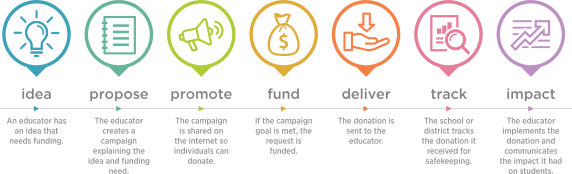
There is space for school and district leaders to participate in all steps of the process—from idea conceptualization to impact reporting. With this kind of involvement from the top, crowdfunding can be leveraged for the benefit of an entire school or district.
To develop a clear vision for crowdfunding, administrators must understand how crowdfunding works in schools. Taking a detailed look at the process teachers go through to lead a crowdfunding campaign can help school and district leaders better support their staff by aligning site-specific policies that work in concert with the steps provided above.
Developing Criteria With Districts in Mind
Each crowdfunding platform realizes the steps of the process differently. To clearly capture the differences between crowdfunding platforms, our research team identified nine criteria that administrators value when considering whether to approve a crowdfunding platform.
How Crowdfunding Platforms Stack Up
To help administrators make sense of crowdfunding platforms, we looked at seven tools to see how each one stacks up. We chose tools that are commonly used by K-12 teachers, have diverse feature sets and that actively promote usage in education.
There is no right or wrong platform or approach; ultimately, administrators must consider their own goals and priorities and consider the platforms that are best designed to support them. The chart below shows some of the most common crowdfunding goals that administrators identified in our research along with the most effective platforms for realizing those goals.
Toolkit: Refining the Vision of Crowdfunding in Your District
Once administrators have a deeper understanding of how crowdfunding can work in K-12 education and how to distinguish between crowdfunding platforms, it’s time to revisit current practices. This toolkit includes four steps to help district leaders refine their vision for crowdfunding so that they might create an informed and balanced policy that makes sense for districts and empowers teachers.
About the report
This EdSurge Research project is made publicly available with support from Chiefs for Change, a bipartisan network of diverse state and district education leaders. EdSurge retains sole editorial control and responsibility for all content. This work is licensed under a CC BY-NC-ND 4.0.
Discover more EdSurge Research projects.
In this Article
Overview
What is the Process for Crowdfunding in Schools?
Developing Criteria With Districts in Mind
How Crowdfunding Platforms Stack Up
Toolkit: Refining the Vision of Crowdfunding in Your District