Research
Exploring the Classroom Experiences of Black Women Educators

Vikkymir Shop / Shutterstock
Currently, Black women make up approximately five percent of the teaching workforce, yet the turnover rate for Black women educators is 21.8 percent.
This trend suggests that there are myriad issues and challenges Black women in education face that impact their ability to teach and engage students in the classroom. As extant literature suggests, the departure of Black women from the education profession has and can lead to a number of negative consequences beyond a sheer drop in the education workforce, including a lack of representation for students at a time when students in the classroom are more diverse than ever.
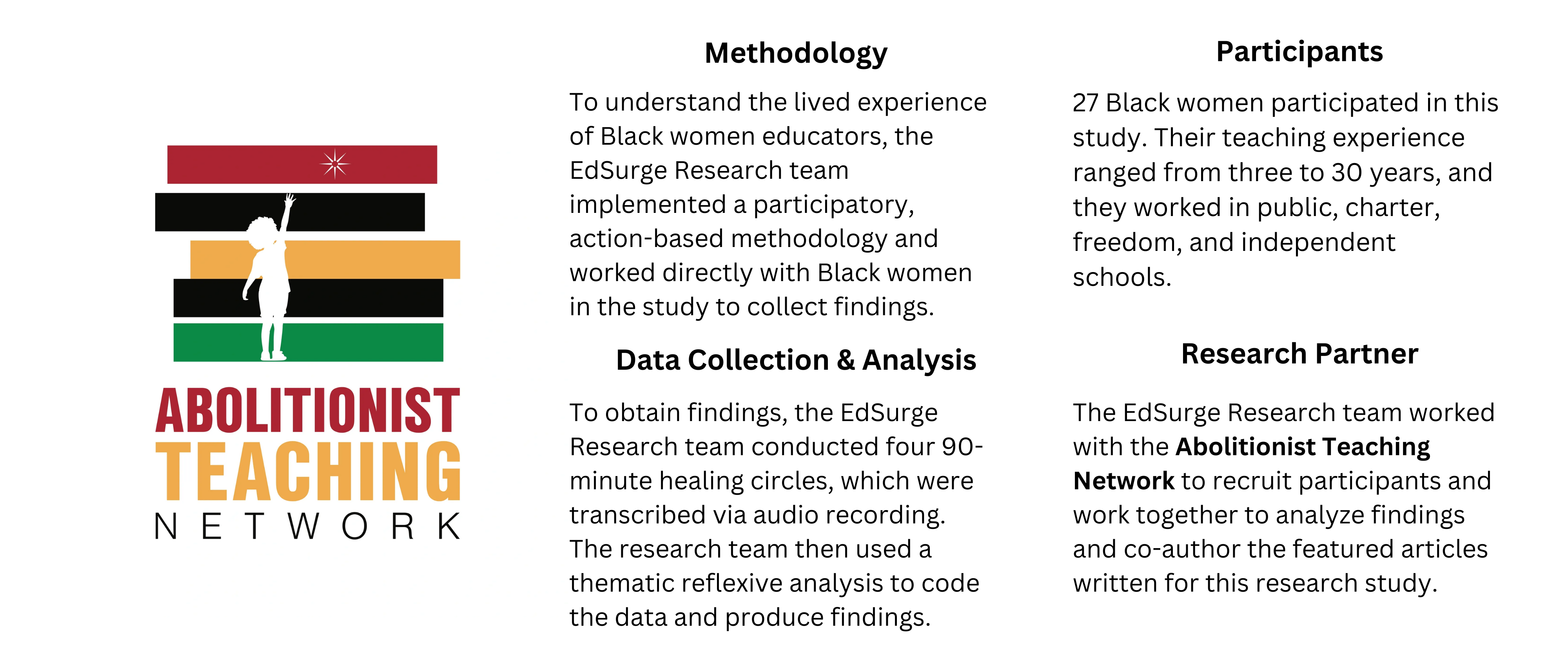
Given the significant need to address this issue from a research and practice perspective, the EdSurge Research team embarked on a collaborative research project, in partnership with the Abolitionist Teaching Network, to better understand the experiences of Black women educators in the classroom and explore the possibilities of what can happen when their needs are address and the joy and healing of Black women teachers are centered.
Please note: Throughout this series, we use the terms “women” and “womxn" interchangeably to recognize the diversity of gender identities and appropriately reflect the gender diversity of the educators who participated in this research project.
Project Overview
Featured Articles
Based on the findings from this project, the EdSurge Research team has produced four articles that expand upon the themes of the research study:
Mi Aniefuna, Senior Research Manager at EdSurge, begins the project series by grounding readers in the various challenges Black women experience in schools — and why they decide to stay in the classroom.
Sarah Wright, an assistant director of an independent school, explained the trauma Black women educators face, and what it would look like to prioritize the mental health of Black women teachers.
Seph Young, a social architect, facilitator, and education consultant, explored how Black womxn navigate teaching while balancing multiple intersecting and marginalized social identities.
Angela Harris, an abolitionist and elementary educator, discussed the important role of healing affinity spaces and why the implementation of these spaces are necessary for the engagement and retention of Black womxn educators.




Related Stories
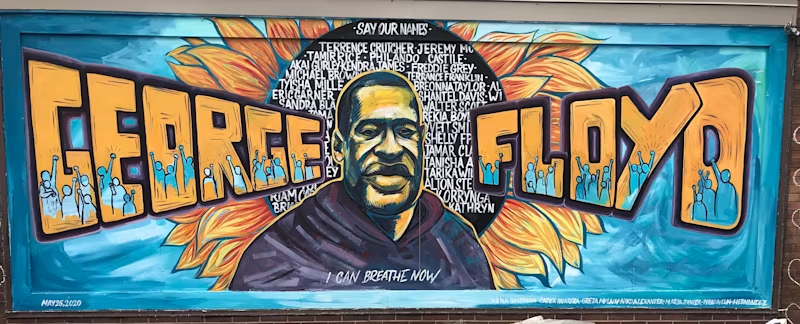
Discover related stories written by and for Black women educators that explores various issues, experiences and challenges they face in the classroom.





Ongoing Coverage
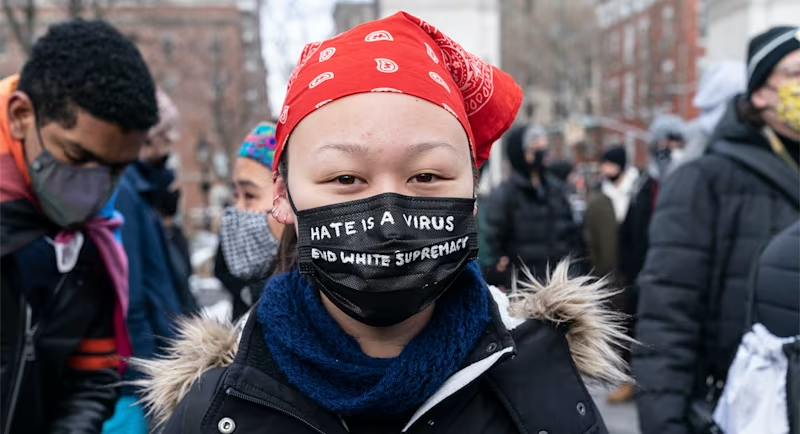
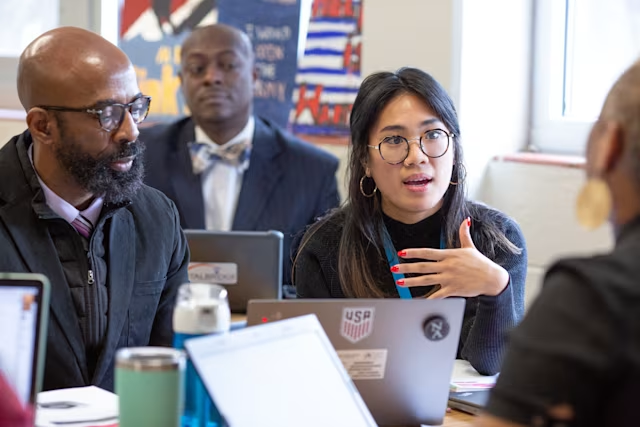
Keep up with current and future research findings and commentary written by the EdSurge Research team.



Contact
This EdSurge Research project is made publicly available with support from the Chan Zuckerberg Initiative. All stories are editorially independent. (Read our ethics statement here.) This work is licensed under a CC BY-NC-ND 4.0.
For more information on methodology or commentary on this project from our research team, contact research@edsurge.com.
In this Article
Project Overview
Featured Articles
Related Stories
Ongoing Coverage
Contact