I Used AI to Build AI-Resistant Assignments
A teacher created an app to fight cheating — and discovered a bigger takeaway.
August 3, 2026

Credit: Suwatchai Wongaong / Shutterstock
Artificial intelligence has wreaked havoc across secondary and higher education classrooms, leaving educators struggling to figure out how to create cheat-resistant assignments and assessments. While everyone is good at diagnosing the problem, no one seems to have a workable solution. So I designed a free tool to help teachers create uncheatable assessments and avoid the headaches of AI and academic dishonesty.
The Cheat Vulnerability Index
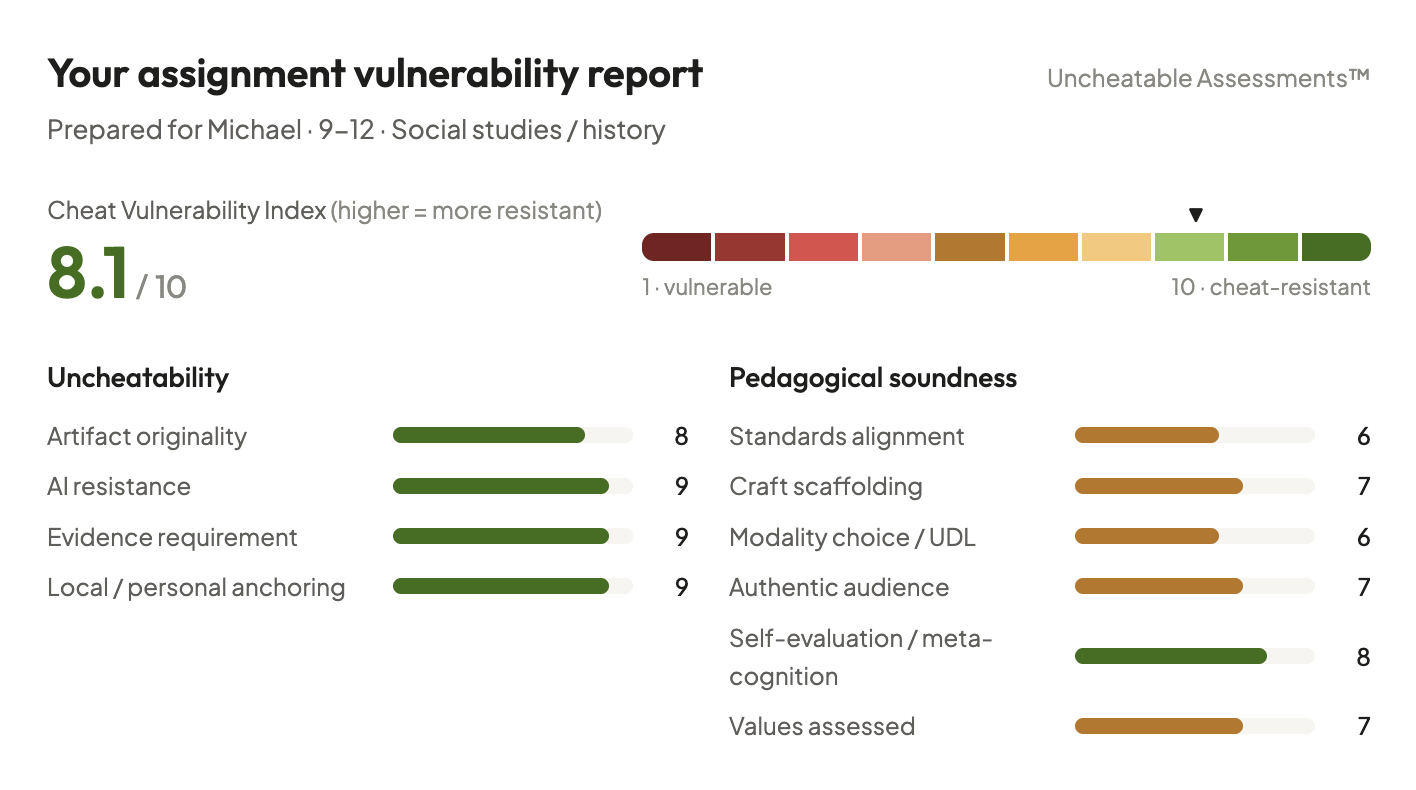
Based on the concepts from my book, course and workshops, I built the Cheat Vulnerability Index, a web app that lets teachers analyze their existing assignments to pinpoint strengths and weaknesses when it comes to vulnerability to cheating. Users upload an assignment, then get a custom report and suggestions for how to make improvements.
I came up with the idea when I noticed that educators struggled to take the ideas from my conference sessions and workshops and implement them in their unique learning contexts. Since I can’t always sit with everyone as they plan lessons or write a syllabus, I wondered how I might scale the concepts and strategies from my content leveraging the power of AI.
I needed to create a brand-new tool that didn’t exist before and to do so with no budget. So I learned to "vibe code," the method of using natural language in an AI model to create computer code. I hadn’t done coding since I used BASIC in high school, and it took me a while to figure out how it worked, and how to turn the code into an interface on my website.
I trained the index on concepts from my book Storytelling With Purpose: Digital Projects to Ignite Student Curiosity and a variety of other workshops and articles I’ve published as the pedagogical framework for the assignment analysis. The concepts, processes and strategies it produces are unique to my published work, and create suggestions through that research-based, classroom-tested lens.
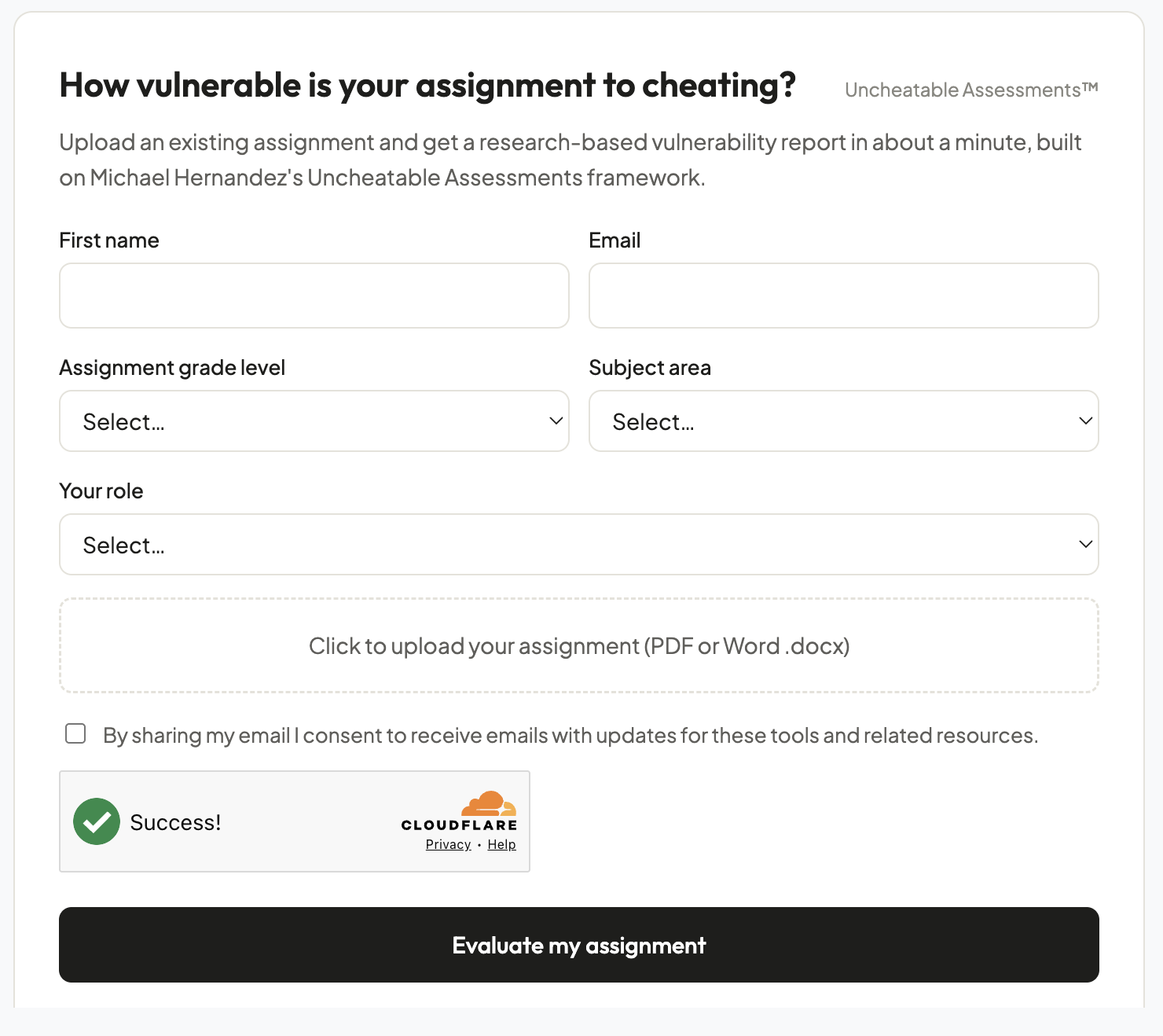
Turns out, vibe coding is a lot like teaching: you begin with deep subject-area expertise (in this case, authentic learning and assessment), create a complex set of detailed instructions and processes for the AI agent to follow (a lesson or unit plan), define what “good” looks like (learning outcomes, standards and rubrics), and how to describe the concepts clearly to an audience (a learning artifact). I was stunned by how well the app turned out, and teachers who have tried it find it useful.
But the biggest takeaway for me is how this experiment revealed the ability of AI tools to remove barriers to learning and how they can facilitate deeper learning through the application of knowledge.
Despite what they say, not everyone can code — including me. So why should coding (or the cost to hire a team of coders) get in the way of my ideas and creating a useful tool to help others? In the same way, how does a student’s writing ability, processing speed or facility as a public speaker affect their grades if our assessments are in-class essays, timed tests or presentations and debates? It got me thinking about the obstacles students face expressing their knowledge and how traditional assessments can get in the way of assessing them.
Students may cheat or cut corners for a lot of reasons, not all of which have to do with moral depravity. Designing uncheatable assessments requires more than adjustments to a single assignment — it requires us to expand our definition of success and to rethink what counts as achievement and how we measure it.
Creating Uncheatable Assessments
The Cheat Vulnerability Index is a quick diagnostic that gives teachers and faculty feedback on a single assignment. But to have meaningful, sustained resilience while maintaining rigor and high standards across an entire school year, teachers need to rethink what and how they assess, and foster cultures of integrity that go beyond any one test or unit.
Cheating happens when two conditions are met: when an assignment is cheatable by design and when students have the incentive to cheat.
Assignments like tests, worksheets or essays are all vulnerable to academic dishonesty simply by their design. AI can write essays, and students can share answers, for example. How can the format of an assignment minimize opportunities for cheating or rely on a combination of multiple metrics that make it less possible?
No matter how well an assignment is designed, if a student really wants to cheat, they will. So instead of trying to surveil students and make our job as educators about policing them, we can create assignments that disincentivize cheating before it becomes a problem in the first place.
There are three ways to do this.
Three Uncheatable Assessment Traits
1. Originality. When we expect students to create the same answers at the same time, we’ve set ourselves up for cheating (with or without AI). Authentic learning experiences result in one-of-a-kind learning artifacts that no other student could copy or use AI to complete entirely.
2. Personal connection. To be truly invested in learning, everyone wants to know “why this matters.” Allowing ways for students to connect curriculum to their lives or community helps them personalize an abstract concept and disincentivizes cheating because they care about the outcome and know it will help them or people in their community. Students should also have multiple opportunities for agency throughout the process.
3. Purpose. What’s the point of students’ hard work? If an assignment ends up in the trash, it sends a powerful message about the value of their effort and your curriculum. Instead, have students create learning artifacts that are designed for users or audiences beyond the classroom. Give students a good reason to complete an assignment with integrity and accuracy. Real stakes beat clever rules.
What’s Next
The problem of academic integrity is more fundamental than preventing students from cheating. AI has forced us to recognize that the old proxies we used to assess students are no longer reliable as evidence of learning (if they ever were), and requires us to redefine what counts as evidence of understanding. Like the Cheat Vulnerability Index I designed that didn’t require me to know the vocabulary or grammar of coding, my learning artifact still required me to build subject-area expertise, identify goals and limits, interrogate what good learning means and take responsibility for the outcome of my work.
As mathematician Terence Tao says about AI disrupting mathematics research, it’s like we’ve been trying to drive a car on outdated roads made for horses and pedestrians, and it’s revealed potholes and bumps and cracks. AI is now giving us faster cars that lead to big traffic jams and accidents.
The destination hasn’t changed, just how we get there. What we need isn’t better ways to catch students cheating, but a new pedagogical road forward.
Popular on EdSurge
News
Hundreds of Thousands of Eligible Kids Are Waiting for Childcare Assistance
Moriah Balingit and Lauren CoffeyNews
A Principal and a Student Reviewed the New ChatGPT for Teens. They Had Plenty to Say
David WeldonRead Next


Voices of Change
Artificial Intelligence


News
EdSurge Podcast
Can Schools Trust AI Features in Edtech Products?

News
EdSurge Podcast