Tech Addiction Was a Problem for My Student — and Myself
Educators need to recognize the warning signs, then have honest conversations in our classrooms and at home.
By Dan Clark
October 14, 2026
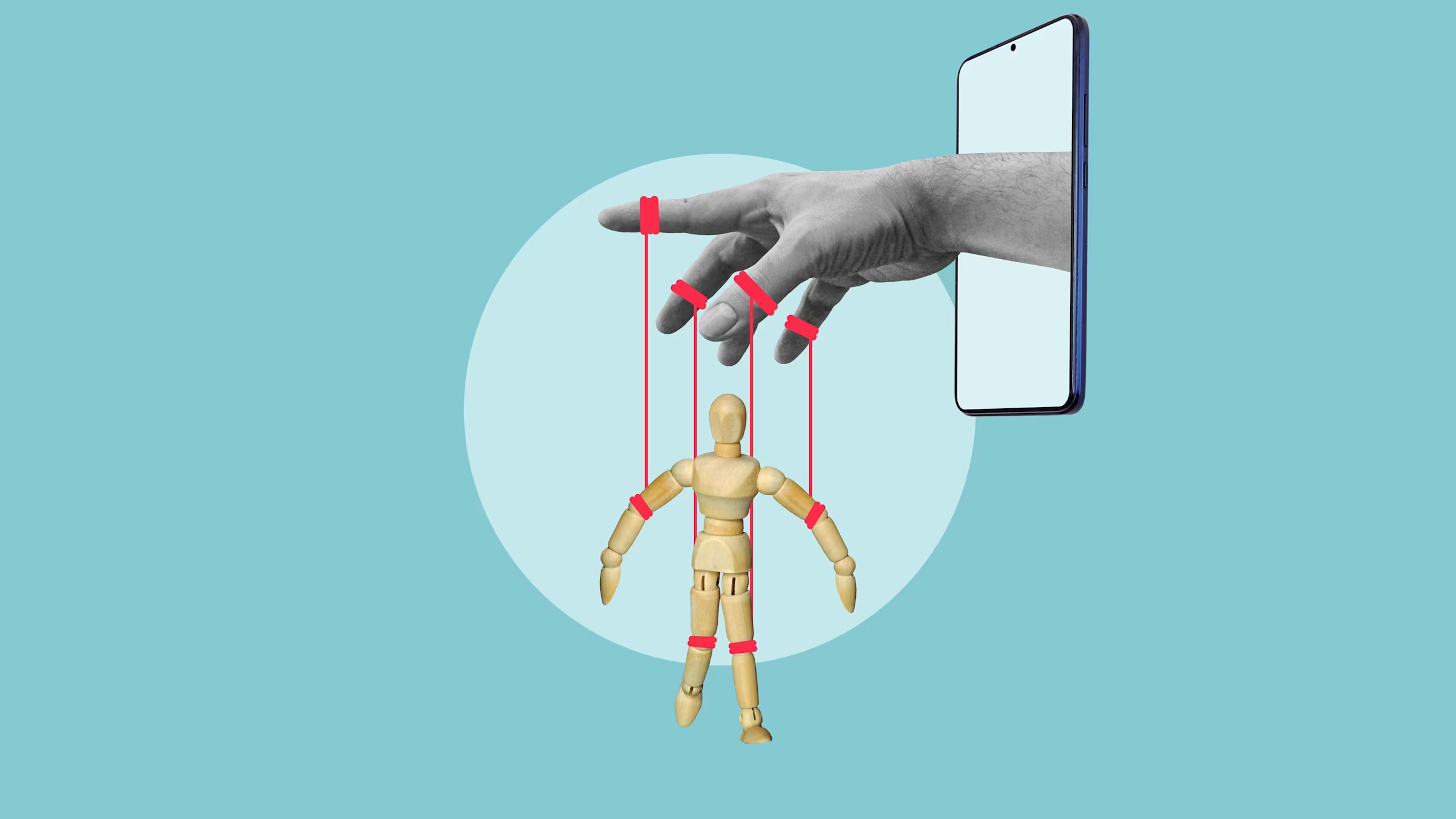
Credit: Jack_the_sparow / Shutterstock
A few years ago, I had a student in my seventh-grade homeroom named Billie who was bright, funny and a talented artist. But over the course of the school year, I noticed Billie became increasingly distracted and sullen whenever they were away from their Chromebook.
When they were on the device, their ability to self-regulate and stay focused on the task at hand was nearly nonexistent. Almost as if led by an unseen force, Billie would regularly switch tabs, search for nonschool-related topics, play games and otherwise get off task.
It is easy to assume teens are simply glued to their devices at all hours of the day. Many adults might shrug and say, “Kids today are addicted to their screens,” without truly considering what that means. Yet most students are simply using the tools available to them, a dynamic no more inherently addictive than when people feared television would rot the brains of youth in the 1960s and 1970s.
Technology addiction is a real issue, and knowing the signs and how to spot them is vital for educators. So what should we be on the lookout for? How do we distinguish the tech savvy from the tech addicted? And most importantly, how do we support students like Billie in the classroom and in an ever-evolving digital world?
21st Century Breakdown
While Billie was never a top-of-the-class student, they were smart and capable. But my colleagues and I soon realized their device usage was starting to become an issue. While everyone else worked, Billie played games. While others read, Billie tried to figure out how to bypass school firewalls to watch YouTube videos. Even when computers were supposed to be off, Billie would hide theirs under the desk, desperately trying to appear engaged while surfing the web.
Because Billie and I had built a good rapport, I started to have the standard teacher conversation, but things took an unexpected turn.
“Buddy, you have to stay on task,” I said. “If you can’t, we may have to take the computer away and go to paper assignments.”
What followed was not the typical pushback of a teenager who got caught. Instead, Billie reacted with tears and an intense emotional outburst. They simply could not understand how they could continue in class without access to their computer.
Later, when I contacted their parents, we realized this pattern was the same at home. A normally sweet and clever kid became angry and fearful when their technology was removed. This was not just a student who liked gaming more than school (let’s be honest, that is most kids); this was something deeper.
Billie’s teachers began logging their reactions during device-free periods, noticing how technology was also eroding Billie’s friendships and isolating them. With guidance from our school counselor and support from their wonderful parents, Billie began therapy and addressed the underlying issue: an addiction to technology.
Walking Contradiction
One way adults can help identify addictive behavior in students is to take a good look at our own habits. I never considered myself to have an addictive personality. Aside from a short stint as a smoker in the early 2000s, I rarely felt controlled by habits that affected my relationships or mental well-being.
That changed when my lovely wife pointed out how often I checked my phone during family dinners, walks and playtime. Often, I was scrolling through random videos of inane things like “Top 10 Sega Genesis games” or guessing 1980s tunes from one-second clips (a skill I’m really good at).
At first, when she brought this up, I became defensive and even a little mad. This was my precious free time and I just wanted to veg out. Then I started thinking, fine, if it’s a problem that I’m on my phone around the family, I just won’t be around them. I started eating breakfast in another room instead of with my 4-year-old and staying up late into the night just to scroll.
Hopefully you see where I’m going with this. Long after helping Billie, I missed my own warning signs. I, too, became addicted to technology. Beyond harmless entertainment and dopamine hits, I was consuming vast amounts of news and political commentary, content that felt increasingly negative, mean-spirited and biased.
My mental health, the relationships with my family and my view of the world were all being eroded. Today, I try to manage the habit with alarms, putting my phone away during work hours and relying on an app that tracks and limits my usage. The first step, as the cliché goes, was admitting there was a problem.
As an adult, I have the knowledge, experience and fully developed brain to recognize my own flawed habits – and even then, only after people in my life intervened. But most kids and teens don’t have the awareness to identify when a hobby turns into an all-consuming habit. So it is up to us adults to remain observant and informed.
Warning Signs
So how can educators, administrators and parents tell whether a student is experiencing an addiction or simply living in the year 2026 with the usual digital habits? Some distinct warning signs include extreme emotional distress when tech is taken away, withdrawing from social connections and hiding or lying about technology usage.
Interestingly, these warning signs are associated with other forms of addiction. Technology addiction warrants the same level of concern and should be treated with the same level of care. Unfortunately, tech addiction among teens seems to carry a similar stigma as gambling or substance abuse.
It is a shame that even as an educator accustomed to observing student behavior, I initially fell into the trap of assuming Billie was “antisocial” or “liked computers.” We can and must do better.
While I eventually learned the full scope of Billie’s struggle, I still didn’t immediately connect it to my own. We want to believe that we know better, and we want to believe our students are “just kids,” but we are all coming to terms with a vastly different world and our ever-evolving technological temptations.
The Road to Recovery
When we suspect a child’s relationship with technology has crossed from technology to addiction, several strategies can help. From finding offline hobbies, spending time with friends and family tech-free or even dedicating screen-free hours each day, we can help break the cycle.
Most importantly, we must normalize open and honest conversations about technology use. Addressing addictions directly — while making the person feel loved and supported — is always the most powerful step. They may be resistant at first. Billie responded with tears and outbursts and I responded with defensiveness and denial. But we all need to know that support is available when we need it the most.
I’m happy to say that by the time Billie went on to high school, they were well on the road to recovery. They were once again a happy and engaged student, a fabulous artist and an all-around goofball. While they still loved video games and aimed for a career in graphic design, therapy and the support of their family and teachers provided them with the tools to stay in control of technology rather than letting technology control them. As for myself, while I slip up from time to time, I have a much healthier relationship with my phone.
Technology is here to stay. It is up to educators and parents to equip students (and ourselves)w with the awareness needed to break the cycle, whether we are helping a student like Billie or recognizing that same struggle in the mirror.
This story is part of an EdSurge series chronicling educator experiences. These stories are made publicly available with support from Learning Commons. EdSurge maintains editorial control over all content. (Read our ethics statement here.) This work is licensed under a CC BY-NC-ND 4.0.
Popular on EdSurge
Read Next



Opinion
Artificial Intelligence
Will Kids Pay the Price for AI Panic?


News
Higher Education
Early Childhood Educators Are Leveling Up at Community Colleges



Voices of Change
Artificial Intelligence